Twelve Injured in Shooting Near Florida University
Twelve Injured in Shooting Near Florida University: Community Faces Renewed Concerns About Gun Violence and Campus Safety (October 25, 2026)
Material update: October 26, 2026 · Investigation remains active; no arrests had been announced in the latest reports reviewed
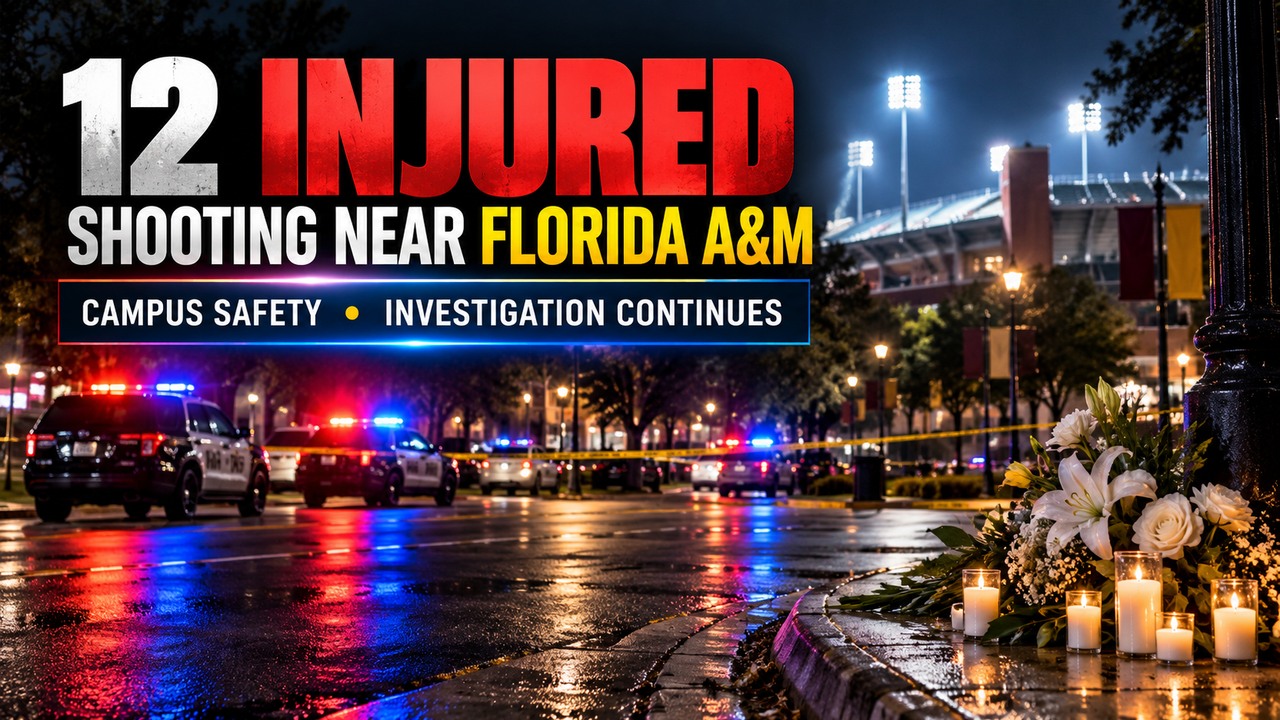
Twelve people were injured in a shooting near Florida A&M University’s Bragg Memorial Stadium in Tallahassee, Florida, on Saturday evening, October 24, during the university’s homecoming weekend. Police said 11 people suffered gunshot wounds, while another person was injured while fleeing the scene. Six victims were juveniles and six were adults; the youngest victim was reported to be 11 years old.
The shooting happened near Perry and Manatee streets, just before 8 p.m., after a homecoming football celebration. Tallahassee police said preliminary information suggested that a physical altercation occurred before the gunfire. As of the latest updates reviewed on October 26, investigators had not announced arrests, and the university stressed that the incident occurred off campus while offering support to students and the wider community.

1. What happened near Florida A&M University?
Tallahassee police said officers responded just before 8 p.m. on Saturday, October 24, to a shooting near the intersection of Perry and Manatee streets in Tallahassee. The incident followed a homecoming football celebration at Florida A&M University, whose football team had played the University of Arkansas at Pine Bluff earlier that day. Bragg Memorial Stadium and the surrounding streets were part of a crowded area as people left the celebration.
Preliminary police information indicated that a physical altercation occurred before the shooting. Investigators have not publicly established the complete sequence of events, identified the people involved or explained what led to the confrontation in the reports reviewed through October 26. The fact that police described an altercation should not be treated as a final determination about motive, responsibility or the role of any specific person.
Police initially reported 12 people injured, including 11 who sustained gunshot wounds. The remaining victim was reported to have been injured while fleeing the scene. Six victims were adults and six were juveniles. At least three people initially had serious injuries, and police said one was in critical condition. An update reported Sunday morning that six victims remained hospitalized, including one in critical condition, while five had been released. The available public updates may not reflect subsequent changes in each patient’s condition.
No deaths had been reported in the Tallahassee Police Department’s Sunday update. Authorities did not announce an arrest by the latest reporting on Monday, October 26. The police investigation continued, with detectives reviewing digital evidence, canvassing the area, collecting physical evidence and asking the public to share information that could help identify those responsible.
| Detail | Information reported by October 26 | Accuracy note |
|---|---|---|
| Location | Near Perry and Manatee streets, close to Bragg Memorial Stadium, Tallahassee | Police and FAMU described the incident as near campus/off campus. |
| Time | Just before 8 p.m. on Saturday, October 24, 2026 | Based on the Tallahassee Police Department’s update. |
| Total injured | 12 people | Eleven suffered gunshot wounds; one was injured while fleeing. |
| Age groups | Six adults and six juveniles | The youngest victim was reported to be 11 years old. |
| Hospital status | Six remained hospitalized Sunday morning; one was in critical condition | Patient status can change, so recheck a newer official update. |
| Arrests | No arrests reported as of the latest updates reviewed | This is a dated status, not a claim that no arrest could occur later. |
| Preliminary sequence | Police said a physical altercation occurred before the gunfire | Cause, motive and responsibility remained under investigation. |
2. Timeline: from homecoming to the continuing investigation
The shooting happened during a major university-community event, so many people were in surrounding streets and investigators appealed for information from witnesses. This timeline summarises public updates rather than attempting to reconstruct unverified actions or assign blame.
| Date | Reported development | What it means |
|---|---|---|
| Saturday, October 24, afternoon | Florida A&M hosted its homecoming football game against the University of Arkansas at Pine Bluff. | Homecoming events brought students, alumni, families and community members to the area. |
| Just before 8 p.m. | Tallahassee police responded to a shooting near Perry and Manatee streets. | Preliminary police information indicated an altercation before the gunfire. |
| Saturday night | Police reported 12 injured, including 11 with gunshot wounds. | Six victims were juveniles and six were adults; early injury assessments were preliminary. |
| Early Sunday, October 25 | Police asked the public for information, photographs and videos. | No deaths or arrests had been reported in the public update. |
| Sunday morning | Police said five victims had been released and six remained hospitalized, including one in critical condition. | Hospital-status figures reflect that morning’s update, not necessarily later changes. |
| Sunday, October 25 | FAMU said the shooting occurred off campus and emphasised safety and support. | The Tallahassee Police Department was leading the criminal investigation. |
| Monday, October 26 | Students returned to class as the university focused on helping its community cope. | WUSF reported that no arrests had been made and police continued seeking tips. |
Initial information often changes as detectives confirm details, interview witnesses and review footage. The chronology should be updated if police release new information, an arrest occurs or victims’ conditions change. The official police release and the latest public-radio report are the most useful first checks before publishing any update.

3. What police are investigating—and how the public can help
The Tallahassee Police Department’s Violent Crimes Unit took over the investigation. The department said detectives worked overnight reviewing digital evidence, examining leads, canvassing the area and collecting physical evidence. As of the October 25 public update, police had not announced arrests and were asking people who witnessed the shooting, heard relevant information or recorded video to come forward.
Police Chief Lawrence Revell said public information could help investigators reconstruct events. In a busy area where people were leaving a football celebration, witnesses may have seen different parts of the incident: events before the shooting, a vehicle or person leaving the area, or the response after the gunfire. A detail may seem minor to someone who witnessed it but could help investigators compare timelines or assess other evidence.
Official channels for tips and evidence
In the Sunday, October 25 update, Tallahassee Police provided a dedicated Perry Street shooting tip hotline at 850-891-4610. The department also said people could provide anonymous information through Crime Solvers at 850-574-TIPS (8477). Police activated an online evidence-submission page for photos, videos and other relevant information.
How witnesses can share useful information responsibly
- Contact investigators using the official tip number or evidence-submission link.
- Preserve original photos or video where possible, including the original timestamp and file metadata.
- Describe what was directly observed and distinguish it from what someone else said or what appeared on social media.
- Avoid editing footage, adding captions that assert unverified facts, or reposting content that exposes private details.
- Do not confront anyone believed to be involved or attempt an independent investigation.
- For anonymous tips, use the channel police identify for that purpose and follow official instructions.
The article does not name suspects because police had not publicly identified a suspect in the latest reports reviewed. It would be irresponsible to infer an identity, motive or affiliation from online posts or an unverified video. Such claims can harm uninvolved people and interfere with a developing investigation.
Why social-media video requires caution
Short clips may show only a small part of an event and may lack reliable time, location or context. A video can show people running without showing what triggered the movement, or it may be posted with a caption that does not accurately describe when or where it was recorded. Investigators can compare original files with other evidence and witness statements to establish a more reliable timeline.
Readers should avoid reposting graphic footage, exposing victims’ identities without confirmation, or sharing alleged suspect details that have not been released by police. If a person has relevant evidence, sending it directly to investigators is more useful than turning it into a public rumour.
4. Florida A&M University’s response and student support
Florida A&M University said the shooting happened near campus, not on the campus itself. University President Marva Johnson addressed the incident and said the university’s community would not be defined by the tragedy. FAMU expressed gratitude to responding officers and said the Tallahassee Police Department was leading the effort to identify and arrest those responsible.
That location distinction matters for students, families and readers. A shooting close to a university can affect its community even when the incident is off campus. At the same time, public descriptions should not wrongly state that gunfire occurred inside a campus building or that the event was part of a university activity without evidence.
Counselling and a return to class
WUSF reported on October 26 that FAMU said counselling would be available for students as they worked through the emotional impact. The university’s public message focused on healing, community identity and looking toward the future. Support can be useful for people who witnessed the incident, know an injured person, were in nearby buildings or feel unsettled by violence in a place they regard as home.
Students respond differently after a traumatic event. Some may feel anxious, distracted, angry or uncertain; others may notice a response later. A university counselling service, trusted instructor, student-affairs office or licensed mental-health professional can help people work through those reactions. This article is not medical advice; someone experiencing persistent or severe distress should seek appropriate professional support.
Campus-community communication
After an incident near campus, clear communication can reduce confusion. Students and families want to know where the incident occurred, whether an immediate threat remains, which areas should be avoided, how classes and services will operate, and where support is available. Universities also need to respect the police investigation and avoid publishing unverified details about victims or suspects.
Useful public updates distinguish between campus operations and nearby police activity. They should explain which agency is responsible for the criminal investigation, link to official updates, and keep support information easy to find. A university can clarify that an incident occurred off campus without suggesting that every nearby street is risk-free or that every question has been answered.

5. What the shooting raises about campus and event safety
The fact that the shooting occurred just off university property shows why safety planning for a large campus event often extends beyond gates and buildings. Homecoming brings students, alumni, families, vendors, local residents and visitors into surrounding streets. Crowds may gather before and after games, and traffic, parking, tailgating, late-night movement and adjoining businesses create a broader public-safety environment.
It would be premature to conclude from one incident that a specific university’s safety system failed. The investigation must establish where the confrontation began, what happened before the shots, which responders were present, what surveillance or witness evidence exists and whether particular measures could have helped. Still, the incident gives campus leaders and local agencies reason to review event safety, communication and support.
Safety planning beyond campus boundaries
Event planning typically involves university officials, municipal police, traffic-management teams, security staff, emergency medical services and local businesses. A review may examine patrol deployment, crowd flow, lighting, road closures, communication channels, access for emergency responders and coordination between campus and off-campus agencies. This list describes general questions a review may consider; it is not a claim that any specific measure was missing in Tallahassee.
- Clear roles: Students should know which agency handles emergencies on campus and which agency leads investigations outside university property.
- Visible reporting channels: Emergency numbers, campus call boxes and official online reporting links should be easy to locate.
- Event crowd management: Organisers can examine how people exit a venue and how surrounding streets are monitored.
- Timely alerts: Notices should distinguish immediate threats, closed areas, official all-clear messages and continuing investigation updates.
- Trauma support: Counselling and student-support resources should remain accessible after emergency activity ends.
- After-action review: Agencies can identify lessons after evidence is collected and operational decisions are assessed.
What students and visitors can do
Individuals cannot control every risk, and responsibility for a shooting belongs to those who commit violence. Practical habits can still help people respond to an emergency: know where exits are, follow instructions from emergency personnel, move away from immediate danger when safe, call emergency services when possible, and avoid returning to a scene to retrieve belongings. People should not approach a suspected armed individual or attempt to film an active threat at close range.
After leaving a dangerous area, follow official instructions about where to gather, whether to shelter or evacuate, and how to communicate with family. A person who is safe can let loved ones know directly while avoiding the spread of unverified names or casualty claims.
Safety messaging must avoid false reassurance
When FAMU said the incident occurred off campus and the campus remained safe, that was a statement about the reported location and the university’s assessment at that time. It should not be read as proof that every nearby street is risk-free or that the investigation has ended. Likewise, the presence of an emergency response does not itself mean a university campus is necessarily under an ongoing threat. Location, time and current official guidance matter.
6. Community impact: trauma, families and public confidence
A shooting that injures 12 people—half of them juveniles—can affect far more people than those physically hurt. Family members may spend hours waiting for updates from hospitals. Witnesses can struggle with what they saw or what they were unable to do. Students may worry about friends, feel unsettled returning to class or question whether familiar public spaces are safe. Neighbours and local businesses may face road closures and the emotional impact of an emergency unfolding outside their doors.
Those effects do not disappear when police tape is removed. A campus community may need time to process the event, and some members may not want to speak publicly. Respecting privacy, avoiding speculation and directing questions to verified sources are important ways to avoid adding further harm.
Supporting people affected by violence
Friends and classmates can help by checking in, listening without pressure and pointing people toward support. Avoid asking someone to recount traumatic details out of curiosity or reposting images of injured people. People who witnessed the shooting may choose to speak with investigators, counsellors or trusted support networks at their own pace, except where urgent information needs to be reported.
For those experiencing distress, supportive steps can include maintaining contact with trusted people, getting rest when possible, limiting repeated viewing of violent footage and seeking professional support if symptoms become intense or persistent. This is not a substitute for clinical care. Someone who feels in immediate danger or needs emergency help should contact local emergency services.
Community resilience without minimising harm
University pride, athletic traditions and shared events can remain meaningful after an incident, but public messages should not pressure victims or witnesses to recover quickly. Acknowledging harm and making support available are compatible with continuing classes and community life. The aim is not to move past the event before facts are known; it is to help people stay connected while authorities investigate.
Public trust also depends on clear, accurate updates. When police say a detail remains unknown, uncertainty should be reported as such. When the university says the incident was off campus, that distinction should be preserved. When an allegation appears on social media, it should not be elevated into verified fact without confirmation.

7. Renewed concerns about gun violence and public gatherings
The Tallahassee shooting renewed concerns about violence near a large public gathering, but this event should not be used as a substitute for broader data on national gun violence or campus crime trends. Responsible analysis separates the verified facts of this case from policy questions about firearms, public-event safety, youth access to violence, policing, prevention programmes and emergency response.
The event also shows how an incident can affect a university even when it takes place off campus. Campuses are part of wider neighbourhoods and transport routes. Their safety plans therefore interact with municipal policing, local business districts, housing, parking and visitors’ movements during major events. Any long-term review should be based on facts investigators establish, not assumptions about a university or its students.
Prevention questions raised by the incident
Public officials and community organisations may revisit how arguments at crowded events are de-escalated, how emergency calls are routed, how officers and paramedics access dense crowds, and how communities share credible information without spreading rumours. The details established in the Tallahassee case will help determine which questions are most relevant.
Schools and colleges also have an interest in prevention through counselling, conflict-resolution services, violence-interruption programmes where available, student engagement and clear reporting routes for threats. These measures do not eliminate all risk and should not be presented as a guarantee. Their value depends on implementation, local needs, coordination and assessment.
Evidence-led policy discussion
Gun-violence policy debates involve constitutional rights, public health, enforcement, mental-health services, community trust and firearms availability. A single case cannot, by itself, determine which broad policy will be most effective. Analysts need reliable data, clear definitions, time periods and careful assessment of unintended effects. For this developing incident, immediate priorities are victim care, factual investigation, public tips and support for the community.
Public discussion should avoid collective blame. The actions of those responsible should not be attributed to an entire student population, neighbourhood or demographic group. Police had not publicly identified those responsible in the latest reports reviewed, so identity-based speculation would be especially inappropriate.
8. What happens next in the investigation?
The immediate next step is more evidence gathering. Police said detectives were reviewing video and digital evidence, canvassing the area and pursuing leads. Investigators may seek to identify witnesses, compare statements, establish the timeline of the altercation and shooting, analyse physical evidence and determine whether a suspect can be identified on the evidence.
Several important details remained unconfirmed in the reports available by October 26: a publicly identified suspect, an arrest, a complete account of what triggered the altercation, a confirmed motive and a final description of each person’s role. These details may become clearer as the investigation progresses, but they should not be guessed.
Information that could clarify the case
- A police announcement of an arrest, charge or named person of interest.
- A verified timeline based on surveillance video, witness statements and physical evidence.
- Further official information about victims’ conditions, if released appropriately.
- Clarification of whether the incident involved one shooter or multiple people, if investigators establish that reliably.
- Updates about the police tip process and whether authorities need additional information.
- Statements from the university or local agencies about safety measures and community support.
Reporting should distinguish between a person being questioned, being identified as a person of interest, being arrested, being charged and being convicted. Those are different stages of a legal process. Until police identify a person and provide reliable information, this article does not attribute the shooting to anyone by name.
How to follow updates
The Tallahassee Police Department is leading the criminal investigation. Its official news page is the primary source for verified case details and the dedicated tip line. Florida A&M’s official website and news channels are relevant for university status, student support and campus communications. WUSF and the Associated Press provide additional reporting on the developments and context.
9. Practical campus and event safety information
This section provides general awareness information and is not a substitute for instructions from law enforcement or the university during an active emergency. The most important safety steps depend on the circumstances and directions given by authorities.
During an immediate threat
- Move away from immediate danger if a safe route is available.
- If leaving would expose you to danger, follow official guidance on sheltering in a secure location.
- Call 911 when safe and provide location and urgent information.
- Follow instructions from responding officers.
- Do not approach the scene to record video or retrieve belongings.
- Do not share unverified suspect descriptions or locations that could misdirect responders.
After leaving the scene
Once safe, communicate your status to family or trusted contacts. If you witnessed an incident, preserve relevant information and provide it through official police channels. Avoid circulating graphic content or private information about victims. If you need support, contact university student affairs or counselling services or another trusted professional.
For families and visitors
Families can use university and police websites to check official information rather than rely on screenshots or old social posts. If a road or area is restricted, respect closures and leave space for emergency vehicles. When contacting a student, a brief message asking them to confirm they are safe is often more helpful than circulating rumours about the incident.
For non-emergency questions, use the university’s published contact channels or the police department’s general information resources. Reserve 911 for urgent safety emergencies.
10. Related U.S. news coverage on USANowDay
Explore these internal USANowDay links for continuing coverage of U.S. news, public safety, universities and community issues. Topic-search pages may surface new articles as they are published.
11. Frequently asked questions
1. How many people were injured in the Tallahassee shooting?
Tallahassee Police reported 12 people injured. Eleven sustained gunshot wounds, while another person was hurt while fleeing the scene.
2. Where did the shooting occur?
It occurred near Perry and Manatee streets, near Bragg Memorial Stadium and Florida A&M University in Tallahassee. FAMU said the incident occurred off campus.
3. When did the shooting happen?
Police said officers responded just before 8 p.m. on Saturday, October 24, 2026, following the university’s homecoming football celebration.
4. Were children among the victims?
Police reported six adults and six juveniles among the 12 victims. The youngest victim was reported to be 11 years old.
5. Were any victims in critical condition?
Police initially said at least three victims had serious injuries, including one in critical condition. AP reported six remained hospitalized Sunday morning, including one in critical condition. Recheck current police updates for later changes.
6. Has anyone been arrested?
As of the latest reporting reviewed on October 26, no arrests had been announced. Police said the investigation was ongoing; this status may change.
7. What do investigators believe happened before the shooting?
Preliminary police information indicated a physical altercation before the gunfire. Police had not established a full public account or motive in the reports reviewed.
8. Did the shooting occur on Florida A&M’s campus?
No. FAMU said the shooting occurred near campus and not on university grounds. Tallahassee Police is leading the criminal investigation.
9. What support is available for students?
WUSF reported that FAMU said counselling would be available. Students should check official university channels or contact the relevant student-support office for updated arrangements.
10. How can witnesses submit evidence?
Tallahassee Police listed a dedicated hotline at 850-891-4610 and anonymous Crime Solvers at 850-574-TIPS (8477). The department also activated an online evidence-submission page.
11. What should people do with videos of the shooting?
Preserve original files and submit them to the official police evidence portal rather than editing or circulating them with unverified claims. Avoid posting private details or graphic material involving victims.
12. Has police identified a motive?
No confirmed motive was provided in the reports reviewed. A preliminary mention of an altercation does not establish why the shooting happened or who was responsible.
13. Is Florida A&M holding classes?
WUSF reported students were returning to class on October 26. For current schedules, access information and campus notices, check FAMU directly.
14. Where can readers find reliable updates?
Tallahassee Police is the primary source for investigation details, Florida A&M is the source for university communications and student support, and AP/WUSF provide additional reporting.
12. Conclusion: answers, accountability and support remain priorities
The shooting near Florida A&M University injured 12 people during a crowded homecoming weekend, including six juveniles. Police said 11 victims suffered gunshot wounds and one person was injured while fleeing. The incident occurred near Perry and Manatee streets by Bragg Memorial Stadium, not on university grounds.
The Tallahassee Police Department continued to investigate as of October 26, reviewing evidence and asking witnesses to submit information. No arrests had been announced in the reporting reviewed. The next verified updates may clarify who was involved and what led to the altercation, but answers should come from evidence and formal police statements rather than online speculation.
For the university and wider community, immediate priorities include caring for injured people, supporting students and families, helping investigators establish what happened, and reviewing lessons for public-event safety. The case has renewed concerns about gun violence and campus-adjacent safety, but broader conclusions should be based on reliable evidence and should not assign blame without proof.
13. Sources and references
- Tallahassee Police Department — “Tallahassee Police Investigating Shooting Near Perry and Manatee Streets,” October 24, updated October 25, 2026. Primary source for the location, victim count, preliminary sequence and dedicated tip line.
Read the official police update ↗ - Associated Press — “Police in Florida are seeking information and videos after a shooting injured 12 at football game,” October 25, 2026. Reporting on the investigation, victims’ status, homecoming context and police request for tips.
Read Associated Press ↗ - WUSF / WFSU Public Media — “Investigation into shooting near FAMU’s campus continues as students head back to class,” October 26, 2026. Reporting on the continuing investigation, FAMU’s response, counselling and police tip channels.
Read WUSF’s October 26 report ↗ - ABC News — “12 injured, including 6 children, in shooting near Florida university,” October 25, 2026. Additional reporting on the initial police briefing.
Read ABC News ↗ - Florida A&M University — official website and news channel. Primary source for campus notices, university communications and student-support updates.
Visit FAMU ↗ FAMU News ↗ - City of Tallahassee — Public Safety and Police Department information. Official source for police services and public-safety updates.
Visit Tallahassee Police ↗ - USANowDay — internal topic search. Related U.S. news and community-safety coverage as new stories are published.
Search USANowDay for campus safety ↗